The Know Thyself Blog: A Guide to Spiritual Awakening
a little enlightened reasoning in an age of insanity
How to Radically Accept Your Physical Body (Dents and All)
How to Radically Accept Your Physical Body (Dents and All)
It is time to place your attention on the wonderland, the horror-show, the carnival of delights, and the tapestry of scars, wounds, boo-boos, and bandages that is your physical body.
Let's be honest for a second: wouldn’t navigating this spiritual journey be a hell of a lot easier without these oh-so-flawed flesh-and-bone vehicles we were given to drive around in?
There is not a single one of us—okay, maybe a handful of sparkly, eighteen-year-old TikTok influencers—who doesn't have, hasn't had, or will never have deep-seated body issues. We all carry a running tally of physical complaints. We are too large. We are too thin. Too pale. Too dark. Too short. We have no ass, or too much ass. We have stubby toes, a big nose, thinning hair, crooked teeth, or funny ears. We feel bland, boring, plain, deformed, damaged, wounded, or broken.
On and on it goes, a relentless critique of the meat-suit we wear.
Driving With One Headlight...
How to Pay Attention to Your Thoughts Without Going Crazy
How to Pay Attention to Your Thoughts Without Going Crazy
I hate to be the one to dash your hopes of becoming a brilliant, highly original thinker, but the thoughts currently bouncing around inside your head aren’t vastly different from the thoughts in the heads of the other eight billion people wandering our lonely little planet.
Even worse, ninety-nine percent of the thoughts you do have aren't even new. They are being replayed on an hourly, daily loop, like a bad disco song lingering in your brain days after you heard it at a tacky wedding.
You are way more than the random, looping thoughts in your head. In Michael A. Singer’s renowned book, The Untethered Soul, he drops an absolute hammer of truth right at the beginning: "There is nothing more important to true spiritual growth than realizing that you are not the voice of the mind–you are the one who hears it."
To actually realize this, we have to start paying close attention to the tracks playing on the mind's radio station. H...
How to Overcome Spiritual Distraction in a Digital World
How to Overcome Spiritual Distraction in a Digital World
Whenever I see someone texting or scrolling while driving, it makes my blood boil. It’s bad enough that they have absolutely zero capacity for self-control, but their lack of discipline puts everyone else in danger. Cruising down the highway at seventy miles an hour with your nose buried nonchalantly in a smartphone as you steer a two-ton rolling block of steel is just plain bad karma.
But this is just an extreme symptom of a universal disease.
If lying is the ego’s smokescreen and denial is its concrete bunker, distraction is its 24/7 carnival. If we don’t put our constant, ferocious appetite for distraction in check, there’s no way we’ll even come close to climbing the spiritual mountains. We simply won’t have the time, the energy, the focus, or the resolve.
To get your time and energy back, you need to see exactly how you are giving your attention away. There are basically two kinds of distraction you need to pay attention...
Circumstantial, Cultural, and Existential: The 3 Types of Denial
Circumstantial, Cultural, and Existential: The 3 Types of Denial
If lying is the ego’s smokescreen, denial is its concrete bunker.
Denial is the juvenile, fear-based solution to dealing with experiences, people, places, and things that don’t fit into our fictionalized reality. Anything we don’t wish to deal with, anything outside our belief system, and anything that may cause us discomfort, anxiety, or pain—we simply deny and conveniently pretend it does not exist.
Often, denial acts as a massive, heavy dam against stress, anxiety, depression, or fear. But if you remember, those uncomfortable feelings are the vital, urgent messages from your Pain Jewel. You can push those messages away, and you can push, and push, and push. But eventually, reality will break down your denial defenses and completely overtake you.
Denial can literally ruin your life. It completely stunts your capacity to pay attention, which means it will completely stall your spiritual journey.
To dismantle the bun...
Finding Your Spiritual Proof Jewel: Why Belief Is No Longer Enough
Finding Your Spiritual Proof Jewel: Why Belief Is No Longer Enough
Most spiritual seekers start their journey running on a very old, very exhausted fossil fuel: belief.
You may believe (fervently, fundamentally, vaguely) in a God, a Self, Jesus, Buddha, an afterlife, an eternal soul, reincarnation, spiritual awakening, enlightenment, or any number of religious concepts, but you don’t actually know if any of them are real.
Glance at the “solid ground” below your feet right now and you’ll see that it isn’t so solid after all. You are, contrary to your beliefs, knee deep in the dark, muddy swamp waters of spiritual ignorance. Most belief systems are constructed from inherited stories, cultural myths, age-old falsehoods or fanciful thinking.
If you attempt to climb the seven spiritual mountains fueled by belief, with a great amount of effort and a lot of luck, you might make it to a few mountain tops. But if your goal is true awakening, belief, faith, hope and any forms of wishful thin...
What is the Pain Jewel? Understanding Existential Depression
What is the Pain Jewel? Understanding Existential Depression
Deep down in the recesses of your being there is an existential pain that most are minimally, consciously aware of. I call this the Pain Jewel.
Read any cheap, mass-market self-help book on the shelf today and you’ll discover that human beings are motived by just two forces: pain and pleasure. We seek joy and peace, and we aggressively avoid stress and hurt. But Western culture has a very difficult time coming to terms with the existential fact that life is indeed suffering.
Whether we lie about it, deny it, stoically stifle it or distract ourselves to death from it, we are constantly trying to numb the Pain Jewel. But if you want to actually wake up and climb the seven spiritual mountains, you have to do the exact opposite. You have to listen to it.
The SOS Signal of the Soul
The first quality of the pain jewel is that it continually broadcasts an SOS signal. That signal emanates from the darkest, hidden-most, central c...
Mindfulness Practice: The Grounded Guide to Rewiring Your Brain
Mindfulness Practice: The Grounded Guide to Rewiring Your Brain
When you hear the phrase "mindfulness practice," what immediately comes to mind? For most people, it triggers a very specific image: waking up at the crack of dawn, sitting completely still on a specialized cushion, and trying desperately to empty the mind of all thoughts.
The wellness industry has marketed mindfulness as an intense, isolated discipline. We treat it like a spiritual workout that we have to force ourselves to do, and when our minds inevitably wander to our grocery list or a frustrating email, we feel like we are failing.
But if you look at the actual mechanics of consciousness, genuine mindfulness practice is not about forcing your mind to go blank in a dark room. It is a highly practical, neuroscientific tool for completely transforming how you experience your everyday life.
Here is the grounded, no-nonsense truth about what mindfulness practice actually is and how to use it.
The Neuroscience of Being...
Self-Discovery: Waking Up from the Story of "You"
Self-Discovery: Waking Up from the Story of "You"
Our modern culture treats self-discovery like a treasure hunt. We are sold the idea that if we take enough personality tests, travel to the right exotic locations, or meticulously curate our hobbies, we will finally uncover the hidden gem of our "true identity."
We treat the self as an object that needs to be found, categorized, and polished.
But if we look at the actual mechanics of consciousness, this approach is fundamentally backward. True self-discovery is not a process of addition or acquisition. It is not about writing a better, more exciting story for your life. It is the profound realization that you are not the story at all.
Here is the grounded, no-nonsense truth about what it actually takes to discover who you are.
The Ghostwriter in Your Head
To understand self-discovery, you first have to look at how your current identity is constructed.
From a neuroscientific perspective, your brain relies heavily on the Default Mo...
Nonduality: The Grounded Truth Behind the Ultimate Spiritual Buzzword
Nonduality: The Grounded Truth Behind the Ultimate Spiritual Buzzword
If you spend enough time exploring mindfulness, meditation, or the mechanics of consciousness, you will inevitably hit the ultimate spiritual buzzword: nonduality.
Often, it is spoken about in hushed, reverent tones, wrapped in ancient Sanskrit or dense philosophical jargon. It is presented as an elite, mystical state reserved for monks or academics. But if we strip away the esoteric fluff, nonduality is not a complicated belief system. It is not a religion, and it is not a temporary altered state.
It is simply the fundamental reality of how consciousness operates—and recognizing it is the ultimate key to dropping the heavy baggage of your ego.
Here is the grounded, practical truth about nonduality.
The Illusion of "Two"
To understand nonduality, we first have to understand the illusion we are currently living in: duality.
Duality means "two." From the time we are infants, our brains are heavily conditioned to...
How to Meditate for Self-Inquiry: The Direct Path to Waking Up
How to Meditate for Self-Inquiry: The Direct Path to Waking Up
When most people think of meditation, they imagine sitting cross-legged on a cushion, trying desperately to force their minds into a state of absolute blankness. They treat meditation like a relaxation tool—a way to temporarily quiet the stress of the day so they can get back to the rat race with a little less anxiety.
If you just want to lower your blood pressure, standard breath-focused mindfulness is great. But if you want to wake up, you need a different tool.
Self-inquiry is not about relaxing the ego; it is about completely deconstructing it. It is the most direct, surgical method for cutting through the illusion of who you think you are and stepping into the reality of nonduality.
Here is the grounded, no-nonsense guide on how to meditate for self-inquiry.
The Goal is Not Silence, But Discovery
In standard meditation, the goal is often to focus on an object—like your breath or a mantra—to quiet the brain's Defa...
Recent Posts
Author

J. Stewart Dixon
Author / Philosopher / Iguana Owner
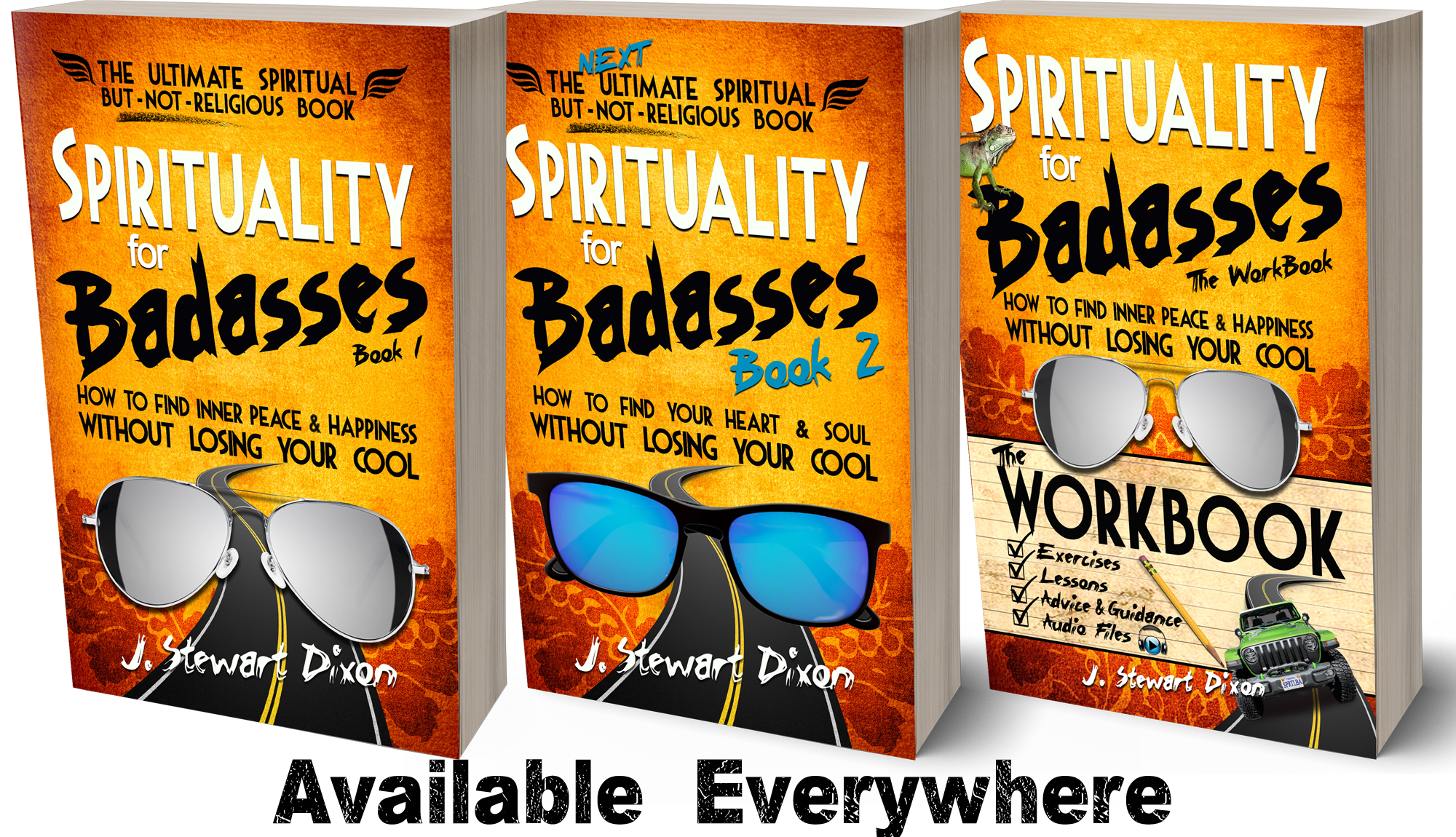
J. Stewart Dixon is an unorthodox, know-thyself, personal-growth teacher and multi-award winning, best-selling author best known for his Spirituality for Badasses book series. He teaches based on thirty years of training, interaction, growth and insight with a wide variety of modern Zen and Nondual teachers, his ongoing education and certification in neuroscientific mindfulness and a degree in communications from Syracuse University.