
How to Practice Mindfulness Daily (Without Meditating in a Cave)

How to Practice Mindfulness Daily (Without Meditating in a Cave)
When most people Google "how to practice mindfulness daily," they are instantly hit with a wave of wellness guilt. The internet tells you that to be truly mindful, you need to wake up at 4:30 AM, sit on a specialized cushion in absolute silence for an hour, and meticulously track your breath.
If you have a job, a family, or a normal modern life, that expectation is a setup for failure. When you inevitably miss a day (or a week), your ego jumps in to judge you, creating more anxiety than you had when you started.
But here is the grounded, practical truth: Mindfulness is not an isolated event you schedule into your calendar. It is not something you do in a dark room; it is a way of being in your everyday life.
Here is how to take mindfulness off the meditation cushion and actually integrate it into your daily routine.
Stop Fighting the DMN
To understand how to practice mindfulness, you have to understand what you are fighting against. From a neuroscientific perspective, your brain is dominated by the Default Mode Network (DMN). This is the neurological home of your ego. When you are not actively focused on a task, the DMN boots up and starts generating your internal narrative—worrying about an upcoming meeting, replaying an argument, or obsessing over what someone thinks of you.
Mindfulness is simply the act of shifting your brain's processing power away from the DMN and into the present moment. You are pulling your attention out of the imaginary future or past and anchoring it in reality.
1. The Mundane Task Anchor
You do not need a quiet room to practice mindfulness; you just need your five senses. Pick one mundane, daily chore—like washing the dishes, taking a shower, or drinking your morning coffee.
Instead of letting your mind wander to your to-do list while you do it, anchor your attention entirely on the physical sensations. Feel the exact temperature of the water on your hands. Notice the smell of the soap or the coffee beans. Listen to the sound of the mug hitting the counter. Whenever your mind inevitably tries to hijack your attention and start a narrative, gently bring it back to the physical sensation. You are literally doing reps for your brain, training it to stay in the now.
2. Utilize the "Flow State"
Mindfulness does not have to be boring. In fact, you probably already practice it without realizing it.
Any activity that requires your complete, immersed attention forces the DMN to quiet down. Whether it is centering a piece of clay on a ceramics wheel, finding the perfect rhythm while casting a line in a trout stream, or intensely focusing on a creative project—this is the flow state. The chattering ego vanishes, and you merge completely with the activity. Identify the hobbies that naturally pull you into flow, and recognize them for what they are: powerful mindfulness engines.

3. The "Reaction Gap"
The most practical application of daily mindfulness is changing how you respond to stress.
Usually, when someone cuts you off in traffic or sends a passive-aggressive email, your ego reacts instantly. Trigger leads directly to emotional explosion. Mindfulness is the practice of inserting a gap between the trigger and the reaction.
When you feel the surge of anger or anxiety, pause. Step into the role of the "Observer." Say to yourself, "I feel my chest tightening and frustration arising." By simply observing the emotion rather than becoming it, you break the circuit. You let the ego flare up and burn out without acting on it.
4. The Transition Check-In
Our days are full of transitions: getting into the car, walking through the front door after work, or opening your laptop. We usually rush through these mindlessly.
Use these natural transitions as triggers for a 10-second check-in. Before you turn the key in the ignition, take one deep breath. Notice where you are holding tension in your jaw or shoulders, let it go, and anchor yourself in the present moment before moving to the next task.
The Bridge to Nonduality
Practicing mindfulness daily is the most effective way to calm your nervous system and reclaim your life from your chattering ego. But it is just the first step on the mountain.
Ultimately, mindfulness is the tool that prepares your mind for the profound shift into nonduality—the realization that the silent awareness you are resting in is not separate from the rest of the universe.
If you are ready to build a bulletproof daily mindfulness practice and use it to discover the unshakeable peace of your true nature, the map is waiting. Dive into the exact mechanics with a

The Know Thyself Course Free Trial
Join our mailing list to receive your free trial, free books and the latest news and updates from author / teacher J. Stewart Dixon
Recent Posts
Author

J. Stewart Dixon
Author / Philosopher / Iguana Owner
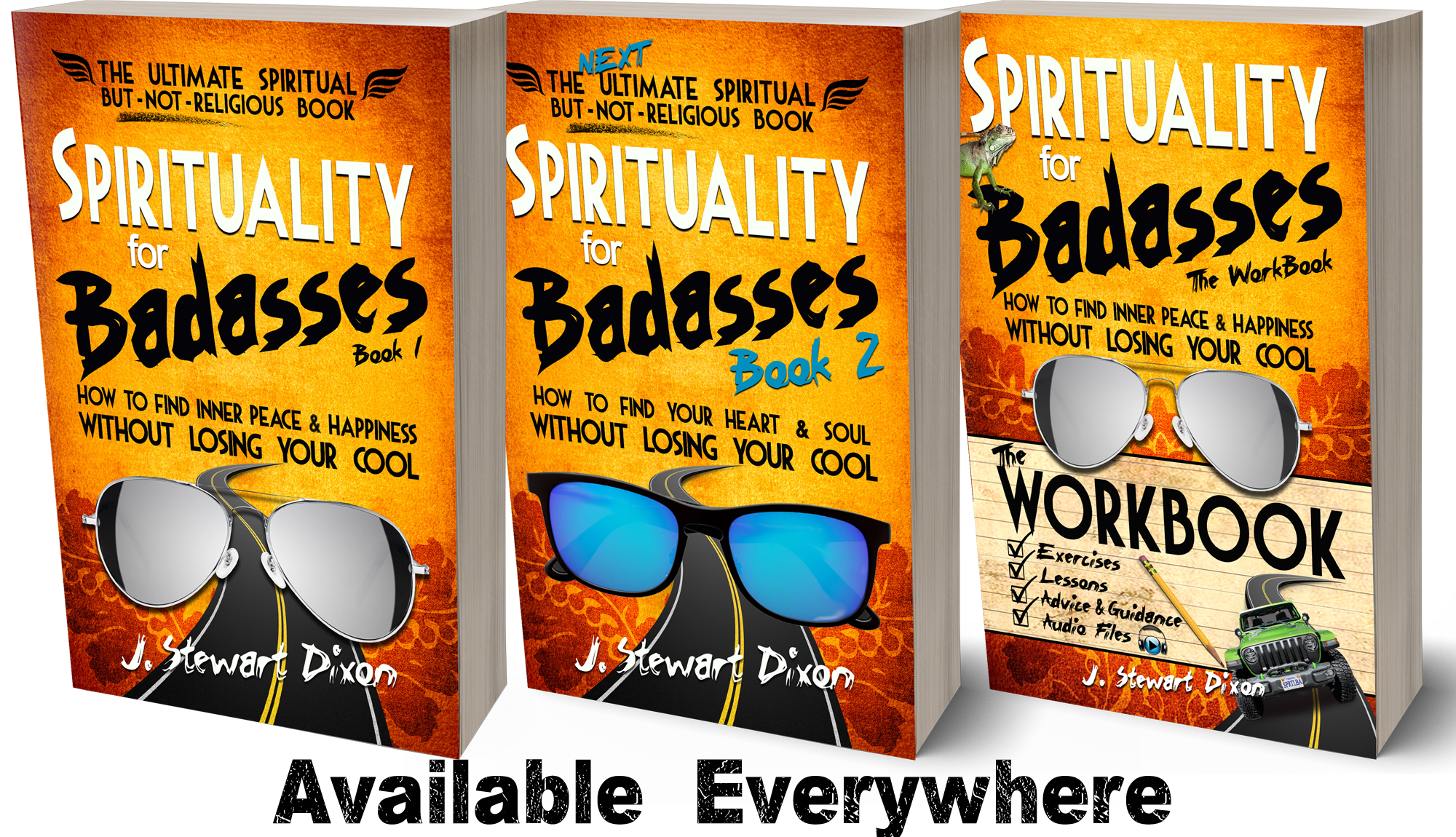
J. Stewart Dixon is an unorthodox, know-thyself, personal-growth teacher and multi-award winning, best-selling author best known for his Spirituality for Badasses book series. He teaches based on thirty years of training, interaction, growth and insight with a wide variety of modern Zen and Nondual teachers, his ongoing education and certification in neuroscientific mindfulness and a degree in communications from Syracuse University.