Ego Death Meaning: What It Is, Why It’s Terrifying, and Why You Need It
Ego Death Meaning: What It Is, Why It’s Terrifying, and Why You Need It
If you spend enough time in spiritual, mindfulness, or psychotropic plant medicine communities, you will inevitably hear the term "ego death." It is often spoken about in hushed, reverent tones as the ultimate spiritual milestone—a mystical initiation that instantly catapults you into permanent enlightenment.
Because of this hype, the term can sound intimidating, woo-woo, or just plain terrifying. But if we bypass the esoteric fluff and look at the actual mechanics of the mind, the true "ego death" meaning is profoundly practical.
You do not actually die. You simply wake up from the illusion of who you thought you were.
Here is a grounded look at what ego death actually is, why your brain resists it so fiercely, and what is waiting for you on the other side.
What is the Ego? (A Neuroscientific View)
To understand ego death, we first have to understand the ego. In pop psychology, "ego" is often used as a synonym for arrogance. But in the context of mindfulness and nonduality, the ego is simply your sense of "self."
From a neuroscientific perspective, your ego is largely generated by the Default Mode Network (DMN) in your brain. This network is responsible for your internal narrative—the voice in your head that chatters constantly. It categorizes the world, worries about the future, dwells on the past, and fiercely guards your identity (your name, your job, your political beliefs, your traumas, and your social standing).
The ego is not a villain; it is a survival mechanism. It was designed to keep you safe by drawing a rigid boundary between "you" and "the outside world." The problem is, we spend our entire lives believing that this chattering voice is who we are.
The "Death" of the Illusion
Ego death is the profound, undeniable realization that you are not that voice.
It is the moment your consciousness steps back and observes the thinker. You realize that if you can watch your thoughts, you cannot be your thoughts. You are the silent, spacious awareness in which those thoughts are happening.
So why is it called a "death"? Because to the brain, it certainly feels like one.
When you stop believing in the story of "you," the ego's structure begins to collapse. Because the ego's primary job is survival, it interprets this loss of identity not as a spiritual breakthrough, but as a literal threat to your existence. It will fight back with everything it has, triggering intense anxiety, profound disorientation, and a deep sense of grief.
This is why ego death can be terrifying. You are stepping off the cliff of everything you have ever known, into the absolute unknown.
The Three Stages of Ego Death
While everyone's experience is unique—whether triggered by deep meditation, a life crisis, or exploring psychotropic plant medicine—the mechanics of ego death generally follow a specific trajectory:
-
The Resistance (Panic): As the boundaries of your identity begin to dissolve, the mind panics. You might feel like you are losing control or losing your mind. The ego grips tightly to its old stories and fears.
-
The Surrender (The Void): This is the turning point. You realize you cannot fight the process, and you let go. The frantic narrative mind shuts down. You enter a state of profound emptiness—the "Dark Night of the Soul"—where the old you is gone, but the new you hasn't stabilized yet.
-
The Rebirth (Nonduality): As the dust settles, the terror evaporates. What is left is a breathtaking sense of spaciousness. The heavy, exhausting burden of having to "be someone" is gone. You experience nonduality—the lived realization that you are not separate from the universe, but an integral, connected part of it.
Life After the Ego Drops
Ego death does not mean you lose your personality, forget your name, or become incapable of functioning in society. The ego doesn't actually disappear forever; it just gets demoted.
Instead of being the tyrannical master of your life, the ego becomes a tool that you can pick up when you need to navigate the world, and put down when you don't. You no longer suffer over everyday frustrations because there is no rigid "self" for those frustrations to stick to. You are finally free to live in the present moment.
How to Navigate the Process Safely
Ego death is a profound psychological dismantling. Trying to navigate it without a clear framework can leave you feeling untethered, anxious, and deeply confused. You need grounded tools to help you surrender to the process and stabilize your new awareness.
If you are undergoing this shift and want to understand the true mechanics of your mind, I invite you to start a

The Know Thyself Course Free Trial
Join our mailing list to receive your free trial, free books and the latest news and updates from author / teacher J. Stewart Dixon
Recent Posts
Author

J. Stewart Dixon
Author / Philosopher / Iguana Owner
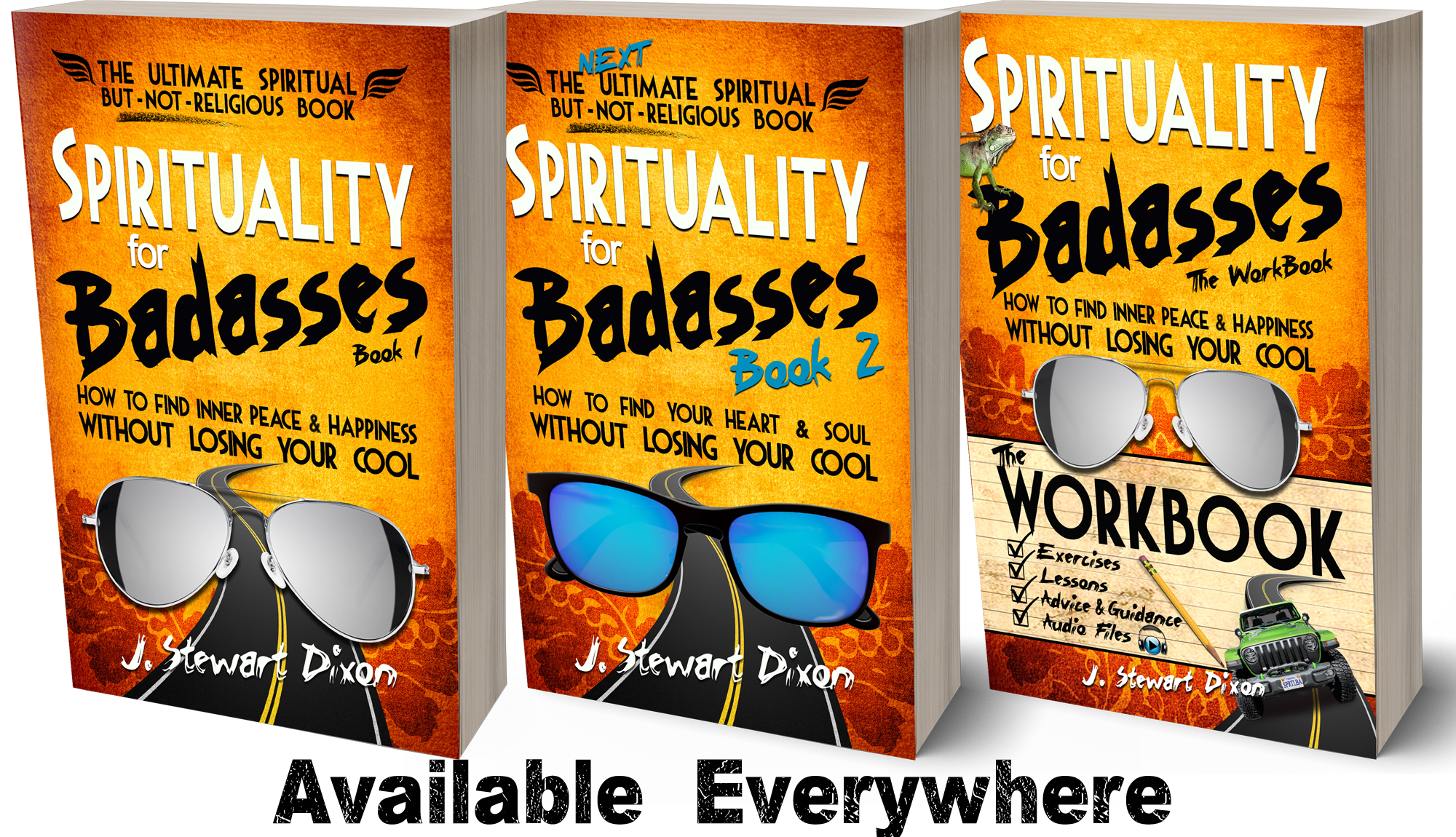
J. Stewart Dixon is an unorthodox, know-thyself, personal-growth teacher and multi-award winning, best-selling author best known for his Spirituality for Badasses book series. He teaches based on thirty years of training, interaction, growth and insight with a wide variety of modern Zen and Nondual teachers, his ongoing education and certification in neuroscientific mindfulness and a degree in communications from Syracuse University.